



Fellowship In Critical Care Medicine
190,000+ strong network: Global expertise, practical skills, & ethical leadership.
 4.2/5
4.2/5
 4.8/5
4.8/5
 4.6/5
4.6/5
 4.3/5
4.3/5
0
Students
0
Placements
0
Trainers
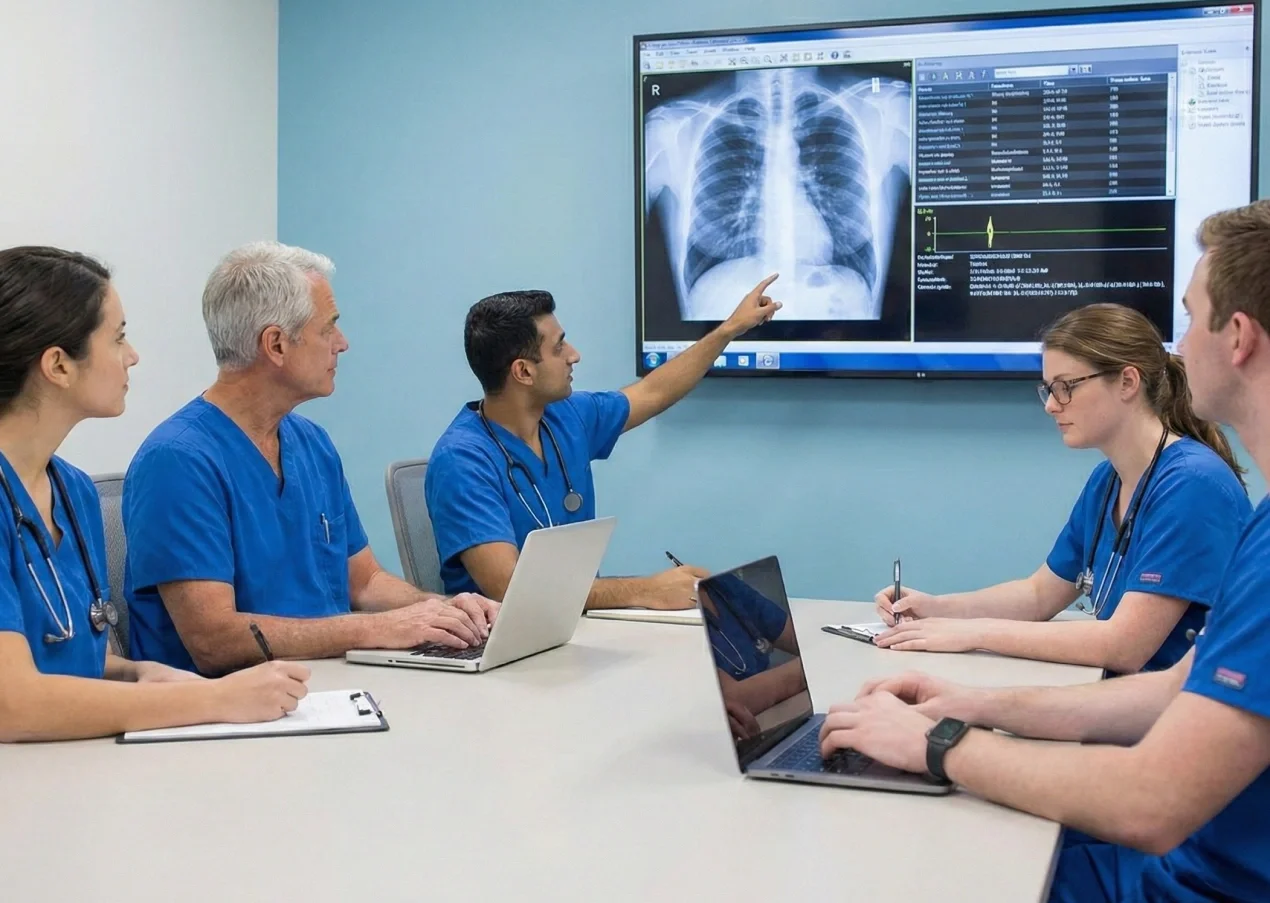
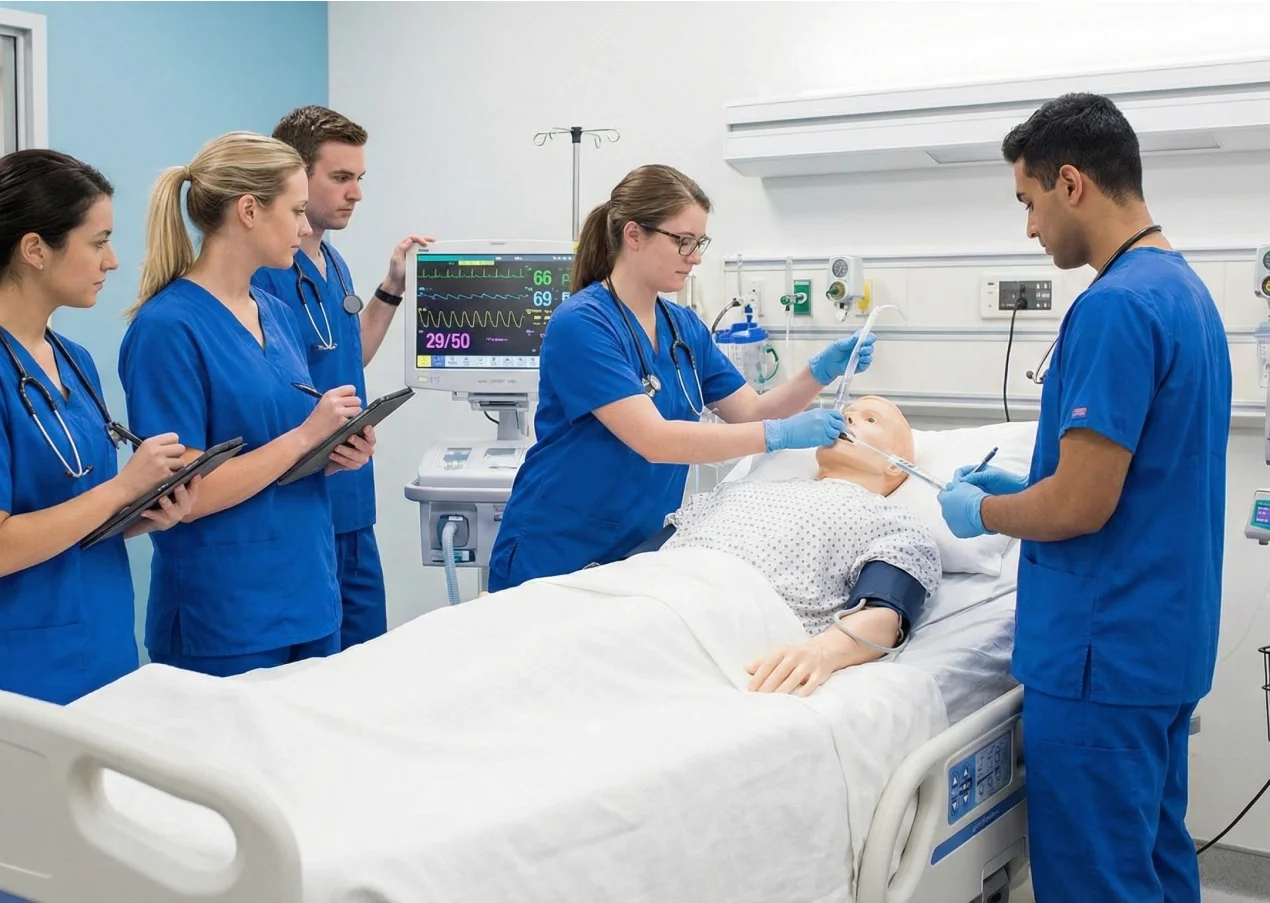
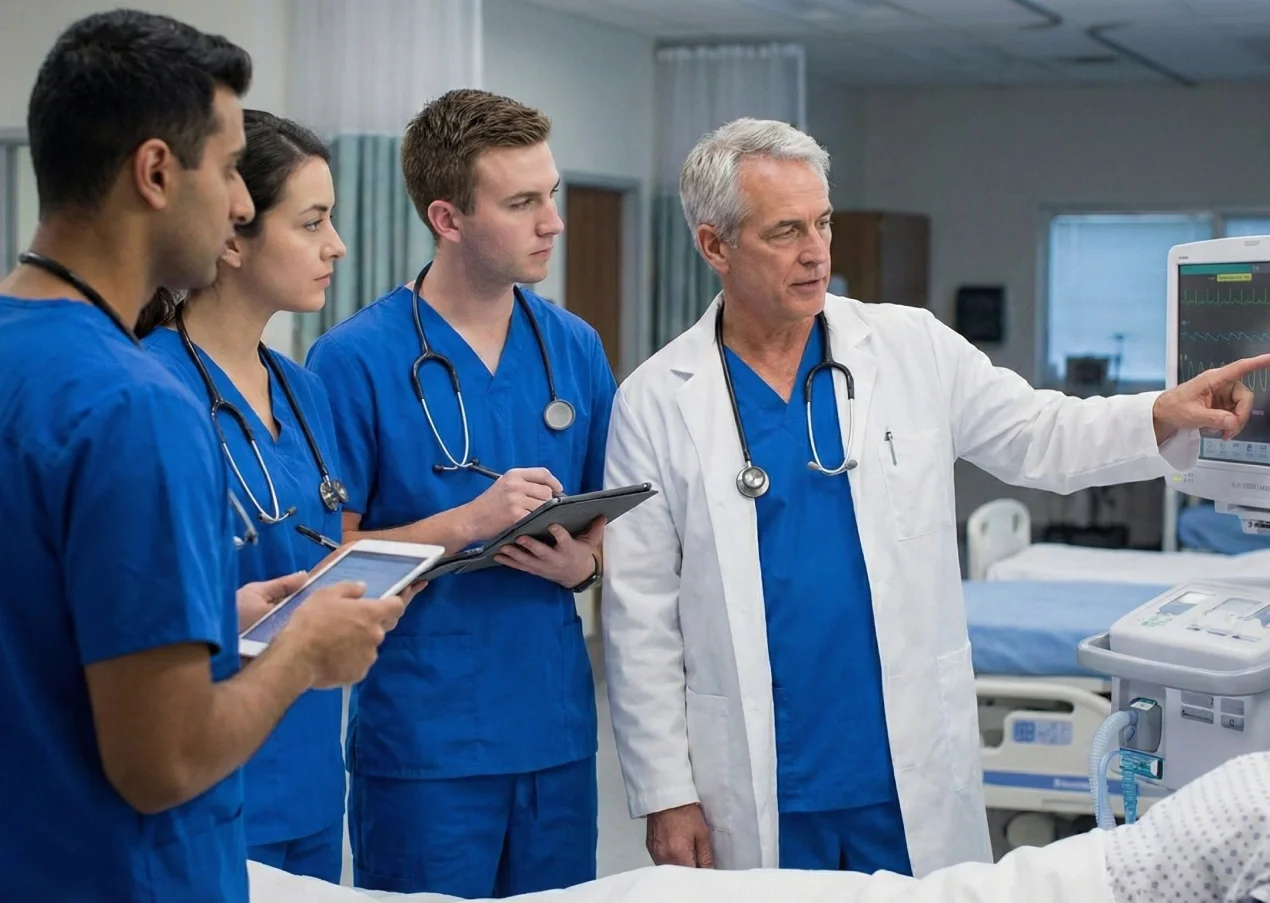
Fellowship In Critical Care Medicine
Critical Care Medicine focuses on the comprehensive management of life-threatening illnesses and serious injuries. It demands multidisciplinary expertise spanning internal medicine, anesthesiology, pulmonology, and emergency medicine. Through a Fellowship in Critical Care Medicine, physicians receive structured training in the evaluation, diagnosis, and management of critically ill patients.
During the program, participants gain hands-on experience in treating a wide range of critical conditions, including severe infections, respiratory failure, shock, trauma, and multi-organ dysfunction.
A Fellowship in Critical Care Medicine after MBBS offers medical graduates an excellent opportunity to develop specialized competencies in managing life-threatening emergencies. The program provides practical exposure to advanced life-support systems, critical monitoring techniques, and ICU-based procedures, laying a strong foundation for a successful and high-impact career in hospital and intensive care settings.
Program Highlights
Discover the advantages of Fellowship In Critical Care Medicine
Career in Fellowship In Critical Care Medicine
In-Depth Learning
Skill Enhancement
Professional Growth
GTR Certification
Future-Ready Skills
10+
Other Benefits
Step into the world of high-paying careers 🚀
0
Students Trained
0
Facilitated Placements
0
Hours of Training
0
Years Operations

Know Your Mentor
Certified SAP MM S/4 HANA
Great Command over RICEFW Objects
Solves complex cross module scenarios
7+ Years Of Experience
Trained 6000+ Students
Simplifies Complex Concepts
Course Curriculum
Resuscitation and initial management of acutely ill
ICU investigations and drugs
Acid base abnormalities
Sedatives in ICU
Electrolyte abnormalities
Nutritional assessment and support
The ICU record
Basic monitoring
Introduction to microbiology in ICU
Antibiotic stewardship in critical care
An alternative approach to acid-base abnormalities in critically ill
Shock
Classification of Shock
Shock management
Heart Failure
Cardiac Arrhythmias
Aortic Dissection
Hypertensive crisis
Cardiac Emergency Management
Cardiomyopathies
Screening for Heart Disease
Pericardial Disease
Infective Endocarditis (IE)
Acute Aortic Syndromes
Aortic Trauma
Cardiac Effects of Acute Pulmonary Embolism
Coronary Interventions
Cardiac MRI Anatomy and MRA
Cardiac Nuclear Medicine Studies
Normal Cardiac CT
Variations in Pulmonary Vascular Patterns
Complications of Myocardial Infarct
Pulmonary Stenosis and Atresia with Intact Septum
Grown-Up Congenital Heart Disease
Single Ventricle Heart Conditions
Coronary Artery Pathology
An Introduction to Heart Failure and Valve Disease
Cardiovascular Disease Prevention and Rehabilitation
Heart Valve Disease – Diagnosis and management in primary care
Heart Valve Disease – Endocarditis
Heart Valve Disease – Introduction
Heart Valve Disease – Treatment and follow up
Imaging of Lung Cancer
Spinal Tumours
Surface Lesion of Bone
Oesophagus: Staging of Tumours
Tumours of the Oesophagus: Treatments
Colorectal Cancer: Follow-Up and Treatment, Management of Recurrence
Pancreatic Adenocarcinoma
Staging of Pancreatic Adenocarcinoma
Gynaecological Cancer: Imaging in Follow-Up
Clinical Aspects, Epidemiology and Diagnosis of Prostate Cancer
Staging Prostate Cancer
Malignant Testicular Tumours
Primary Tumours of the Spinal Cord
Spinal Extramedullary Tumours
Colorectal Cancer 18 FDG PET/CT
Gastro-oesophageal Cancer 18 FDG PET/CT
Carcinogenesis
Causes of anaemia associated with breathlessness
Anaemia and breathlessness
Anticoagulation in pregnancy
Spontaneous bleeding
History of acute asthma
Assessing severity of acute asthma
Chronic asthma
Asthma guidelines and inhaler technique
Differentiating COPD and asthma
Interstitial lung disease and the acute medical take
Investigation and management of interstitial lung disease
Symptoms and signs of pulmonary embolism at initial presentation
Pathway to diagnosing interstitial lung disease
Difficulties of treating interstitial lung disease
Interstitial lung disease case studies
New lung cancer diagnosis and management
Variability of lung cancer presentations
Presenting features of pulmonary embolism
Common causes of pulmonary diseases
Managing pulmonary embolism special circumstances
Risk factors for pulmonary embolism
Definition and description of bronchiectasis
Mechanisms behind haemoptysis in bronchiectasis
Rarer causes of haemoptysis
Investigation and management of rarer causes of haemoptysis
Common and serious respiratory causes of cough
Importance of good history
Taking an occupational history
The Gastro-Oesophageal Junction, Hiatus Hernia and Reflux Disease
Oesophagus: Tumours of the Oesophagus
Common Clinical Problems: Managing Abdominal Radiological Emergencies
Postoperative Appearances of the Oesophagus
Post-operative Appearances of the Stomach and Small Bowel
Gastrostomy Insertion
Non-Neoplastic Disorders of the Stomach and Duodenum
Small Bowel: Barium Examination of the Small Bowel
Crohn’s Disease
Small Bowel: Diffuse and Multi-system Diseases of the Small Bowel
Small Bowel: Structural and Vascular Abnormalities of the Small Bowel
Abdominal Radiographs: Uses, Limitations, Techniques and Normal Anatomy
Malignant Tumours of the Small Bowel
Small Bowel: G-I Stromal Tumours (Hollow Organ and Mesentery)
Small Bowel Obstruction
Colon Evacuation Proctography and Pelvic Floor Anatomy
Endoanal Ultrasound and Anal/Rectal MRI (Non-Malignant) Fistula Disease
Colon: Diverticular Disease of the Colon
Idiopathic Inflammatory Bowel Disease
Upper GI Normal Anatomy and Techniques: Endoscopic Ultrasound
Colorectal Cancer: Follow-Up and Treatment, Management of Recurrence
Colon: Other Miscellaneous Disorders of the Colon
Further Diseases of the Appendix
Imaging and Intervention of Solid Viscera Techniques
Gallbladder and Biliary Tract: Normal Anatomy
Gallbladder and Biliary Tract: Examination Techniques of the Biliary Tree
Gallbladder and Biliary Tract: Staging of Cholangiocarcinoma
Gall bladder and Biliary Tract: Inflammatory Conditions of the Biliary Tract
Normal Liver Anatomy and Examination Techniques
Anomalies and Anatomic Variants of the Liver
Liver: Benign Lesions of the Liver – Haemangioma, Cysts
Liver: Malignant Tumours of the Liver – Hepatoma
Malignant Tumours of the Liver: Others
Management of Hepatic Malignancies
Infectious and Other Non-Neoplastic Conditions of the Liver
Liver: Cirrhosis and NASH
Liver: Vascular Disorders of the Liver and Splanchnic Circulation
Liver: Vascular Disorders of the Liver and Splanchnic Circulation – Intervention
Abdominal Trauma
Pancreas: Normal Anatomy and Examination Techniques, Anomalies and Anatomic Variants
Oesophagus: Motility Disorders of the Oesophagus
Pancreas: Pancreatitis Diagnosis (Acute)
Pancreas: Pancreatitis Diagnosis (Chronic)
Pancreatic Adenocarcinoma
Other Pancreatic Neoplasms
Staging of Pancreatic Adenocarcinoma
Spleen: Normal Anatomy and Examination Techniques
The Abnormal Spleen
Goodpasture’s disease signs and symptoms
Causes of nocturia
Definitions of chronic kidney disease
Management of chronic kidney disease
Causes of dysuria
Investigation and management of urinary tract infection
Investigation and management of acute kidney injury
Investigation and management of haematuria
Renal replacement therapy in critical care
ACP and different illness trajectories
Case study: end-stage renal disease
Discussing ‘Do Not Attempt CPR’ decisions
Framework for end-of-life care in advanced kidney disease
Symptom management complicated by coexisting conditions
The management of diabetes at the end of life
AKI – Differential Diagnosis
AKI – Fluid Resuscitation
AKI – Life-threatening Complications
CKD – Hypertension in CKD
Coma
Headtrauma
Spinal cord injury
Chronic cord compression: Examination findings
Definition of stroke
Stroke differential diagnosis in younger patients
Stroke: Where is the lesion?
How to take a headache history
Parkinson’s disease: Classical symptoms and signs
Parkinsonism
Parkinson’s disease: Diagnosis, investigation, management
Clinical findings associated with spinal cord compression
Causes of acute spinal cord compression
Spinal cord compression
The vestibular system and its connections
All about uncompensated vestibular disorders
Types of speech disturbance
Areas of the brain and associated speech disturbances
Brain tumours affecting speech: Types, treatment, management
Dealing with the unconscious patient
Management of acute back pain
Safe sedation
First fit: Investigation and management
Signs and symptoms of viral encephalitis
All about HSV encephalitis
Investigation and management of urinary tract infection
Management of the septic patient
Investigation and management of Sepsis
e-Assessment – UTI
Urinary Tract Infections
Standard 15: Infection Prevention and Control e-Learning
Social Distancing, Hand Hygiene and Personal Protective Equipment
Taking Care of Residents and Yourselves
Taking Care of the Environment
Leprosy
Lyme Disease
Subcutaneous Mycoses and Other Mycoses
Infectious Blisters
Cutaneous Leishmaniasis
Dermatological Presentations of COVID-19
Staphylococcal Related Skin Disorders
Acute Wound Infections
Chronic Osteomyelitis in the Lower Limb
Finger Tip Infections
Care of airway equipment
Hand washing
Safe sharps disposal
Pneumococcal Infections in HIV
Tuberculosis
Herpes Infections
Cytomegalovirus
Cryptosporidiosis and Microsporidiosis
Herpes Infections
Cytomegalovirus
Cryptosporidiosis and Microsporidiosis
Genital Lumps
Differential Diagnosis of Anogenital Warts
Anogenital Warts
Cervical Intraepithelial Neoplasia (CIN)
VIN, PIN and VAIN
Infection Prevention and Control
Anaphylaxis
Poisoning
Other signs of cocaine use
Investigation and management of paracetamol overdose
Abdominal pain
Acute confusion
Blackout or collapse
Basic Care, Done Well
Emergency Care
Emergency Front of Neck Airway
Understanding Tracheostomies and Laryngectomies
Active Cycle Breathing Technique (ACBT)
Arterial Blood Gases
Auscultation
Chest X-Rays
Humidification
Incentive Spirometry
Insufflation Exsufflation (cough assist)
Intermittent Positive Pressure Breathing
Introduction to Assessment and Clinical Reasoning
Manual Techniques
Non-Invasive Ventilation
Oxygen Therapy
Paediatrics
Suction
Tracheostomies
Sedation
CVP monitoring
Do Not Attempt Resuscitation Orders
A structured approach to the critically-ill patient
Airway Maintenance: Facemask
Anatomy and Basic Views
Arterial line: indications, insertion, complications
Basic Lung Ultrasound
Catheter Insertion
Central Venous access: indications, sites and complications
Communicating with ill people
Electrolytes
Equipment and monitoring for patient transfer
Initial management of AKI
Intravenous Fluid Therapy
Invasive ventilation 1: indications, initial settings, basic modes, complications
Invasive ventilation 2: Advanced modes, trouble shooting, rescue therapy (incl ECMO)
Left Ventricular Function
Limitations and Pitfalls
Nasogastric Insertion
Overview of Monitored Sedation
Pathology
Image Interpretation – Abdominal Ultrasound: Aorta
Image Interpretation – Abdominal Ultrasound: The FAST Scan
Image Interpretation – Vascular Ultrasound: Vascular Access
Image Interpretation – Plain X-rays of the Adult Chest: Introduction
Image Interpretation – Plain X-rays of the Adult Chest: General Anatomy and Physiology
Image Interpretation – Plain X-rays of the Adult Chest: The Normal Chest X-ray
Image Interpretation – Plain X-rays of the Adult Chest: Airspace Opacification
Image Interpretation – Plain X-rays of the Adult Chest: Interstitial Lung Disease
Image Interpretation – Plain X-rays of the Adult Chest: Nodules
mage Interpretation – Plain X-rays of the Adult Chest: Hila, Mediastinum and Heart
Image Interpretation – Plain X-rays of the Adult Chest: Pleural Conditions and Diseases
Image Interpretation – Plain X-rays of the Adult Chest: Emergency, Lines and Instrumentation
Who is this course for?
MBBS Graduates.
MBBS Final Years Student
Applicants who are in their final year can also apply.
MD/DNB/FNB & residents working in healthcare.
Ayush ( BAMS / BHMS / BYNS /BUMS )
Training Delivery
Discovery call
A call to evaluate training requirements and adjust course and delivery accordingly.
Tech call with Certified Instructor
A call with the instructor to address specific queries and requirements.
Customized Curriculum
Tailored curriculum to meet specific learning objectives and needs.
Training & LMS Access
Start training sessions with access to the Learning Management System.
Live Training
Interactive live sessions to enhance learning experience.
Hands-on Labs
Role-based training with practical exercises and labs.
Course Materials
Access course materials anytime through LMS.
Progress Metrics
Track student progress with analytics and reports.
Gamified Quiz
Engaging final quiz to reinforce learning.
🎓 Certificate of Completion
Get a verifiable certificate after successfully completing the training.
Student Video Testimonials
Watch real success stories shared by our students.



Choose Your Plan
Start your journey with flexible pricing options
Fellowship In Critical Care Medicine
Live Online
₹225,000
₹150,000
+ ₹30,000 after placement
✔ Live interactive classes
✔ Doubt solving sessions
✔ Placement support
Fellowship In Critical Care Medicine
Recorded (12 Months Access)
₹195,000
₹130,000
✔ Recorded lectures
✔ Mock tests & question bank
✔ Doubt support
Frequently Asked Questions
A Fellowship in Critical Care Medicine is an advanced training program that equips physicians with specialized knowledge and practical skills to manage critically ill patients in intensive care settings.
Medical graduates who have completed MBBS (or an equivalent qualification) are generally eligible. The program is particularly beneficial for physicians interested in ICU practice, emergency care, anesthesiology, internal medicine, or pulmonology.
Most Fellowship in Critical Care Medicine programs are typically one year in duration, though this may vary depending on the institution and training format.
The curriculum usually includes:
Advanced life support techniques
Mechanical ventilation
Management of shock and sepsis
Acute respiratory failure
Trauma and emergency care
Organ dysfunction and multi-organ failure
Invasive monitoring and ICU procedures
Yes. Reputed programs provide practical training in ICU procedures such as intubation, central venous line placement, arterial line insertion, and ventilator management under expert supervision.
Critical care specialists primarily work in Intensive Care Units (ICUs) within hospitals, trauma centers, and tertiary care facilities.
Yes. Many institutions, including GTR Academy, offer structured programs that may include flexible or blended learning formats suitable for practicing doctors.
No. A Fellowship in Critical Care Medicine is an advanced certification program and does not replace a DM or DrNB degree. It is intended to enhance clinical competence and procedural expertise.
The fellowship helps physicians:
Build expertise in managing life-threatening conditions
Improve clinical decision-making under pressure
Enhance procedural skills in ICU care
Increase career opportunities in hospitals and critical care units
After completion, participants typically gain:
Advanced critical thinking and rapid decision-making abilities
Expertise in life-support systems and ventilator management
Competence in managing complex ICU cases
Improved teamwork and leadership skills in multidisciplinary environments

Approved Training Partner
Approved Training partner under the scheme for market-led fee-based services by NASSCOM