

Doctor of Business Administration
Advance your career to the highest level of business leadership. Transform your expertise into strategic impact with our globally recognized program.
0
Students
0
Placements
0
Trainers



Doctor of Business Administration
The program covers key areas including Management Operations, Entrepreneurship, Leadership, Innovation, Technology, and Strategy, enabling students to operate effectively in dynamic and multicultural global settings. Through the International Global Practicum, students gain cross-cultural exposure and apply theoretical frameworks to real-world business challenges in collaborative, consultative environments, with voluntary participation at no additional cost. The curriculum also focuses on Research and Analysis, guiding students in developing empirical research projects, as well as Teaching, helping them build the skills necessary to become effective educators and thought leaders in the field of business administration.
Program Highlights
Discover the advantages of Doctor of Business Administration
Career in Doctor of Business Administration
In-Depth Learning
Skill Enhancement
Professional Growth
GTR Certification
Future-Ready Skills
10+
Other Benefits
Step into the world of high-paying careers 🚀
0
Students Trained
0
Facilitated Placements
0
Hours of Training
0
Years Operations

Know Your Mentor
Certified SAP MM S/4 HANA
Great Command over RICEFW Objects
Solves complex cross module scenarios
7+ Years Of Experience
Trained 6000+ Students
Simplifies Complex Concepts
Course Curriculum
This course emphasizes furnishing students with a robust comprehension, both theoretically and practically, of the fundamental tools utilized in equity valuation and stock selection. Valuation methodologies covered comprise dividend discount models, cash flow models, and valuation based on multiples.
In this course students will learn advanced techniques of micro and macroeconomic analysis applicable to business decisions. This is the focus of this course. Students are expected to apply economic concepts, theories, and tools to solve business challenges. Topics include fundamental legal and practical considerations of financing packages; market structure; pricing and resource allocations; applications of managerial strategy and public policy with an emphasis on competition; market power and a business firm’s optimal response to government regulation.
In this course students will learn advanced integrated marketing communication mix will be the focus of this course. Topics include consumer behavior; market research; product planning and development; pricing; advertising strategies; budgeting; personal selling; media cross-marketing; advertising regulation; strategic planning for international markets; special events and sales promotion; public relations and publicity. Students are expected to produce an original Marketing Plan for a potential product/service. This will be major form of assessment in this course.
The course presents the basis of Data Science in Business Analysis applications. Students will understand the uses and applications of data analysis for business, whether in the search for effective results, predicting situations, or making more assertive decisions, through Business Intelligence, Big Data, Data Mining, Data Warehouse, and data collection. The course will also address issues related to data protection in companies and organizations.
Fundamental accounting procedures and the uses of accounting information. Topics include recording transactions; controlling, costing, and analyzing inventories; reporting and controlling liquid assets; measuring and reporting long-operating assets; current and contingent liabilities; the time value of money; accounting for long term debt; installment notes payable; analyzing and reporting owners’ equity; balance sheets and statements of cash flow; and managing and accounting for corporate income tax. Students also learn the legal and tax benefits of corporations, proprietorships, and partnerships.
An overview of the process of planning, organizing, leading, and controlling material and human resources in order to achieve the stated goals of the organization. Topics include major management theories; the macro and micro dimensions of an organization; managing suppliers, customers, competition, staff and personnel, budgets, and communications.
Theoretical, managerial, and hands-on approaches to the study of research and design. Students will learn a variety of techniques and tools to solicit, evaluate and communicate information for problem solving purposes. The course will look at different types of research processes; how to write a research proposal; create and implement design strategies; gather and evaluate data, and then present the results to appropriate audiences. There will be a strong emphasis on statistical skills and analytic techniques.
This course focused on the application of the principles and practices of strategic management. Students learn to identify, analyze, and evaluate corporate objectives and strategies in order to select, develop and deploy resources to improve the organization’s competitive position vis-a-vis its products, services, financing, technology, personnel, and markets. By reviewing, revising, and changing corporate policies and strategies, businesses are repositioned for improved growth and profit. The outcome of this course is a strategic management plan for a product/service/organization, which will be the measure of application of knowledge.
This course content seeks the presentation and detailed contextualization of business strategy-related aspects, business rules, and management, allowing the development and expansion of thought and innovation implementation for companies and businesses, packaged from the perspective of competitive advantage, which results in creating leaders ready for all the varied challenges at the job market.
The course presents the basis of innovation, its characteristics, instruments, concepts, and actions of management innovation with the support of disruptive technologies. This content is based on open innovation in business management processes using disruptive technologies as support. Students will understand the leading disruptive technologies used in management and creation in the corporate area, with case studies of disruptive technology’s usage in the direction of organizations and companies’ innovation.
The Predictive & Risk Analysis course offers a comprehensive exploration of methodologies and tools used to anticipate future outcomes and manage risks effectively across various domains. This course blends theoretical foundations with practical applications to equip participants with the skills needed to make informed decisions in uncertain environments.
Theoretical, managerial, and hands-on approaches to the study of computers and information technologies for problem solving and decision making. Topics include information systems; system components and properties; and types of information useful to end-users; strategic uses of computers and computer networks in organizations, to analyze systems, information flows, transaction processing, applications of database management; major trends; concepts, applications, and technical alternatives in telecommunications. Students will work with standard applications software packages including Microsoft Office, spreadsheet applications, database management, graphics, as well as software specific to their respective areas of specialization.
This course is designed to equip students with the knowledge and skills necessary to lead organizations through the process of technological transformation. In today’s rapidly evolving technological landscape, businesses and institutions must adapt to stay competitive and relevant. This course provides a comprehensive understanding of the principles, strategies, and tools essential for orchestrating successful technological transformations. Students will explore various aspects of technological transformation, including the identification of emerging technologies, assessment of organizational readiness, formulation of transformational strategies, and implementation of change management initiatives. The course will delve into case studies, real-world examples, and best practices from industry leaders to illustrate effective approaches to technological transformation. Throughout the course, students will engage in interactive discussions, case analyses, group exercises, and hands-on projects to apply theoretical concepts to real-world scenarios. By the end of the course, students will be equipped with the knowledge and leadership capabilities to effectively lead technological transformations within their organizations and drive sustainable success in an increasingly digital world.
This course intends to broaden students’ vision of the future of technology applied to the business world and other areas of society, through the Planning and implementation of new technologies. Studies on Generative AI, Digital Twins, Computational Vision, Internet of Things (IoT), Robotics, Blockchain, Metaverse, Cloud Computing, Edge Computing, Quantum Computing, Cybersecurity, Prompt Engineering, Low Code, No-Code, Technologies in support of ESG, Internet of Bodies (IoB), Cognitive Computing and Singularity. Case studies in applying new technologies in business and other areas of society.
Students will gain comprehensive knowledge involving the internet, web servers, cryptography, the OSI model, data privacy, and security measures. The curriculum delves into essential topics such as cyberspace, cyber threats, cyber-attacks, the dark web, darknet, social engineering, vulnerabilities, bugs, viruses, and trojans.
This discipline offers an in-depth study of leadership complexities and its followers. The course covers everything from fundamentals to future trends. It explores classic and contemporary leadership theories, the dynamics between leaders and followers, ethical and values issues, emotional intelligence, psychological influence, adaptive leadership, diversity and inclusion, global leadership, technology, and digital leadership. The course aims to equip students with a comprehensive understanding of the interactions between managers and followers, enabling them to lead ethically, innovatively, and effectively in organizational or social contexts.
Research as a basic element in the training process needs to be socialized and incorporated in all stages of curriculum development, in this sense it is necessary to put it into practice from the different epistemological positions. Hence, this subject focuses its efforts on explaining research as a concept, which supports its progress in scientific knowledge, methods, approaches, and paradigms.
The development of theoretical and practical content to successfully approach a problem requires total immersion of the researcher, because this phase of the process is the basis of what is intended to be built. A good approach generates the questions that will be formulated at the beginning and answered at the end of the study, additionally it will derive the general objective or initial purpose, which is systematized in the specificity to answer what is asked as the initial premise. Of course, it is essential to carry out the corresponding delimitation to determine limits and scope. In this sense, the objective of the subject is to formulate a research problem, specifying the objectives/purposes that direct the processes, the justification and delimitation.
In this subject we will be working with the state of the art of investigation, beginning with the background check, based on its importance, which is focused on avoiding duplication of work, as well as similar investigation procedures. Similarly, the structure of the theoretical framework, the system of variables or categorical matrix, with its respective operationalization or categorization, as appropriate, is reviewed. The idea is to know the theoretical construction of the study that is carried out.
In this course students defend the methodology of research design, the gathering of research data, the analysis of the research findings, and the conclusions derived from their research.
Who is this course for?
Anyone who wants to learn SAP MM module
Other ERP professionals who want to learn SAP MM and become functional experts.
IT professionals, software engineers, project managers, and business analysts who want to upgrade their skills to the SAP ecosystem.
SAP Supply Chain professionals, software engineers, project managers, and business analysts.
Students from arts, commerce and UPSC background can enroll in the SAP Course with ease in Corporate IT Job.
Aspiring data professionals looking to master the industry's leading transportation management tool.
Students desiring a comprehensive, engaging, and highly interactive approach to SAP MM training.
Training Delivery
Discovery call
A call to evaluate training requirements and adjust course and delivery accordingly.
Tech call with Certified Instructor
A call with the instructor to address specific queries and requirements.
Customized Curriculum
Tailored curriculum to meet specific learning objectives and needs.
Training & LMS Access
Start training sessions with access to the Learning Management System.
Live Training
Interactive live sessions to enhance learning experience.
Hands-on Labs
Role-based training with practical exercises and labs.
Course Materials
Access course materials anytime through LMS.
Progress Metrics
Track student progress with analytics and reports.
Gamified Quiz
Engaging final quiz to reinforce learning.
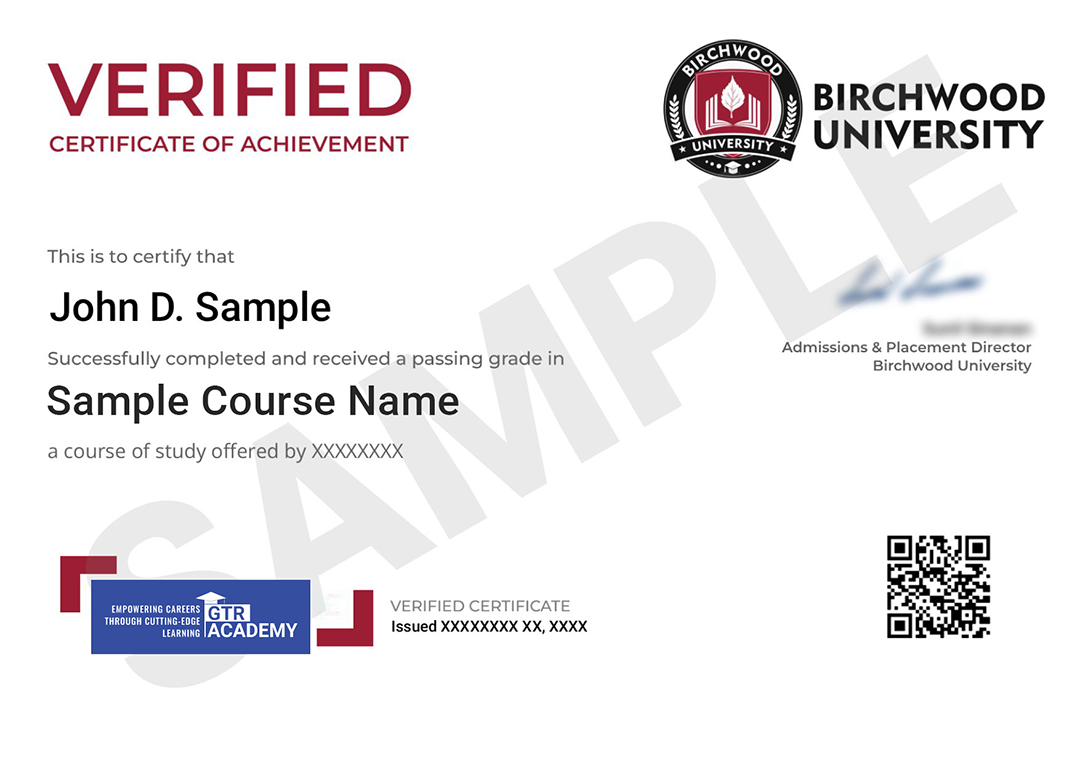
🎓 Certificate of Completion
Get a verifiable certificate after successfully completing the training.
Student Video Testimonials
Watch real success stories shared by our students.



Choose Your Plan
Start your journey with flexible pricing options
Doctor of Business Administration
Live Online
₹44,250
₹29,500
+ ₹30,000 after placement
✔ Live interactive classes
✔ Doubt solving sessions
✔ Placement support
Doctor of Business Administration
Recorded (12 Months Access)
₹22,499
₹14,999
✔ Recorded lectures
✔ Mock tests & question bank
✔ Doubt support
Frequently Asked Questions
This course emphasizes furnishing students with a robust comprehension, both theoretically and practically, of the fundamental tools utilized in equity valuation and stock selection. Valuation methodologies covered comprise dividend discount models, cash flow models, and valuation based on multiples.
No. The Doctorate in Business Administration program, offered in collaboration with Birchwood University, is completely online. You will not need to visit the campus. However, Doctorate in Business Administration scholars are required to fulfil all coursework and research requirements and meet the program criteria to be awarded the Doctorate in Business Administration degree.
The Doctor of Business Administration is for 2 years.
Business Consultant
C-Suite Executive
Economist
Professor
Organizational Development Manager
Director of Human Resources
Government Program Manager
Nonprofit Executive Director
Strategic Planner
Market Research Analyst
Project Manager
Logistician
At Birchwood University, you’ll invest in your future, not a campus, every bit of your investment for the program is worth it, from your time to your money.
Approved Training Partner
Approved Training partner under the scheme for market-led fee-based services by NASSCOM